

 Français


The car, the leading mode of transport in Belgium: what impact on health?
The car, the number one mode of transport in Belgium
According to a study, 50% of Belgians travel daily, all modes of transport combined.
The car remains one of the most widely used modes of transport, with 94% of Belgians using it for their journeys. It is used at least three times a week by more than half of the population. However, there are disparities depending on geographical areas. Car usage is lower in large cities such as Brussels, where public transport is preferred.
The car is also more widely used in Wallonia, where 85% of distances are travelled by car, compared to a national average of between 75% and 78%. Despite the growing popularity of more environmentally friendly modes of transport, such as cycling and especially electric bikes, the share of car travel distances has remained stable for the past 25 years.
Daily car journeys: what impact on health?
Although the car is essential for daily travel, it can have consequences for our health: increased fatigue, back pain and neck pain.
This is mainly due to seats that are often poorly adjusted, a posture that puts strain on the body, and shocks and micro-vibrations experienced while driving (engine vibrations, road irregularities, speed bumps, etc.).
A few simple actions can help ensure comfort during journeys and limit the onset of pain while driving.
Properly adjusting your car seat
Adjusting your seat helps reduce postural strain on the body:
- 1 - Increase the seat height to raise the pelvis. Car seats are slightly tilted backwards, which forces the knees to sit higher than the pelvis. In this position, the back curves forward and the intervertebral discs, which are meant to protect the spine from shocks, become compressed and can no longer perform their shock-absorbing role. Raising the pelvis helps naturally straighten the back and reduce muscular tension.
- 2 - Move your seat forward or backward to keep your arms as close as possible to a right angle. This helps limit tension in the shoulders and neck.
- 3 - Slightly recline the backrest. As with the seat base, this helps open the pelvic angle slightly to reduce strain on the back.
Using equipment to prevent pain while driving
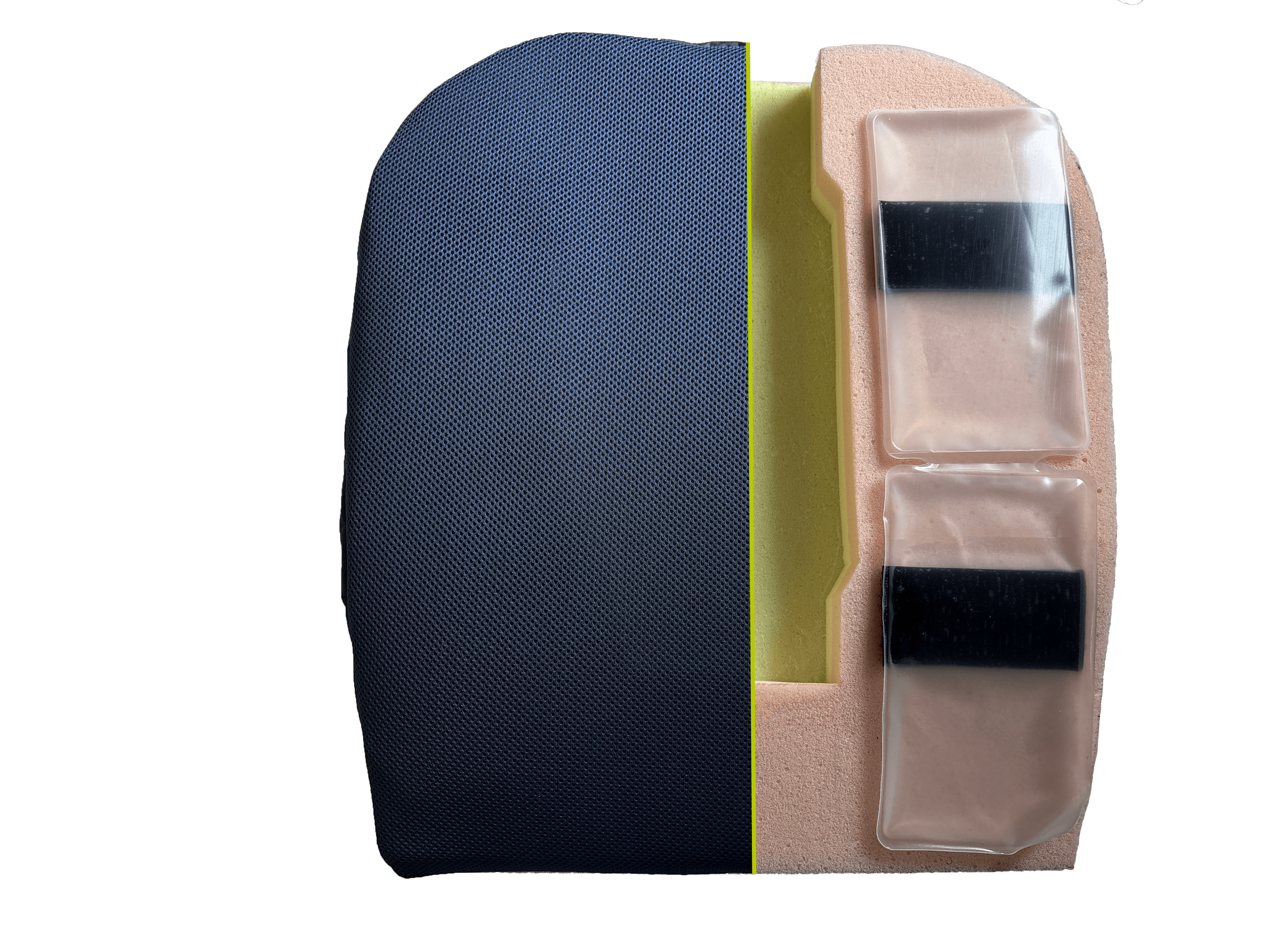
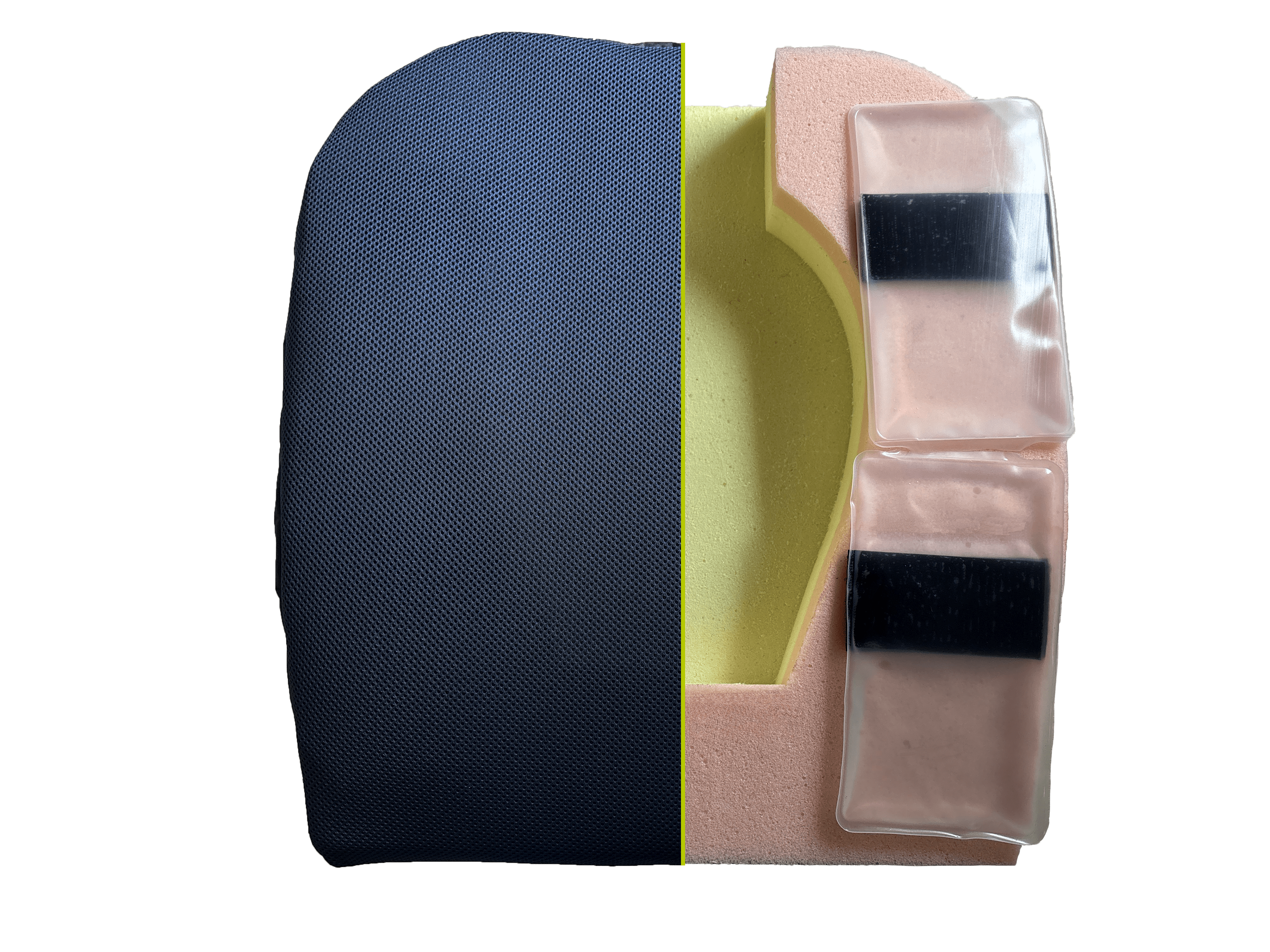
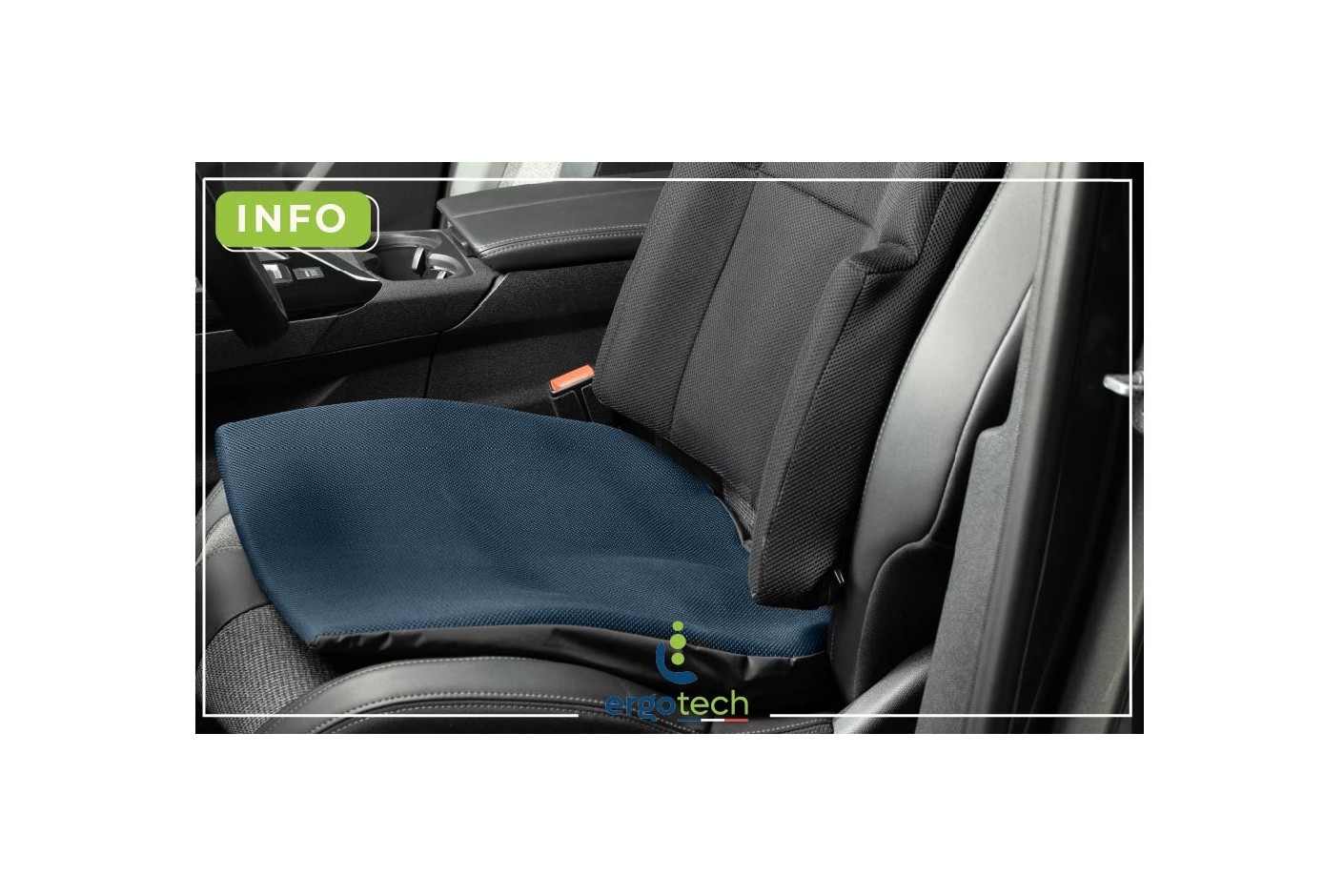
When seat adjustments are not sufficient and to address shocks and vibrations, it is possible to equip your car with specially designed cushions.
An ergonomic car seat cushion helps improve posture and block shocks and vibrations transmitted through the seat. Choosing a cushion specifically designed for car use and made with suitable foam is essential. Foam that is too soft, such as cushions made entirely of memory foam, will not sufficiently absorb shocks and vibrations.
Back cushions and lumbar supports are also available to support the spine. Choose a model with adjustable height and a flexible shape to support the back without creating constraints, which could otherwise worsen pain.
An expert in ergonomics and workstation design, Ergotech offers a range of specialized equipment to improve comfort and reduce pain while driving. Delivery available throughout Belgium.