
 Français

Brightness, Colour Temperature… Which Lighting Should I Choose for My Office?
Choosing the right office lighting is essential to work in good conditions. Inadequate lighting can cause visual fatigue, discomfort and reduced concentration, while adapted lighting improves comfort, productivity and well-being at work.
Between direct or indirect lighting, colour temperature, light output and anti-glare features, here are the answers to the most frequently asked questions to help you choose suitable office lighting.
Direct or Indirect Lighting?
Direct lighting illuminates the work surface directly, while indirect lighting diffuses light towards walls or the ceiling.
- • Direct lighting: ideal for reading, writing
- • Indirect lighting: provides softer, more even light and reduces contrast
For office work, the best solution is often a combination of both: indirect general lighting complemented by adjustable direct task lighting.
White or Yellow Light?
The colour of light has a direct impact on concentration and visual fatigue.
- • Warm light (2700–3000 K): cosy atmosphere, not ideal for prolonged work
- • Neutral white light (3500–4500 K): the ideal balance between comfort and alertness
- • Cool light (5000 K and above): very stimulating, can be tiring over time
For professional use, neutral white light is the most recommended.
Which Lighting is Best Suited for Office Work?
Office lighting should meet several criteria:
- • Sufficient brightness
- • Even lighting, without shadowed areas
- • No glare and no reflections on the screen or surrounding surfaces
- • Adaptation to individual needs
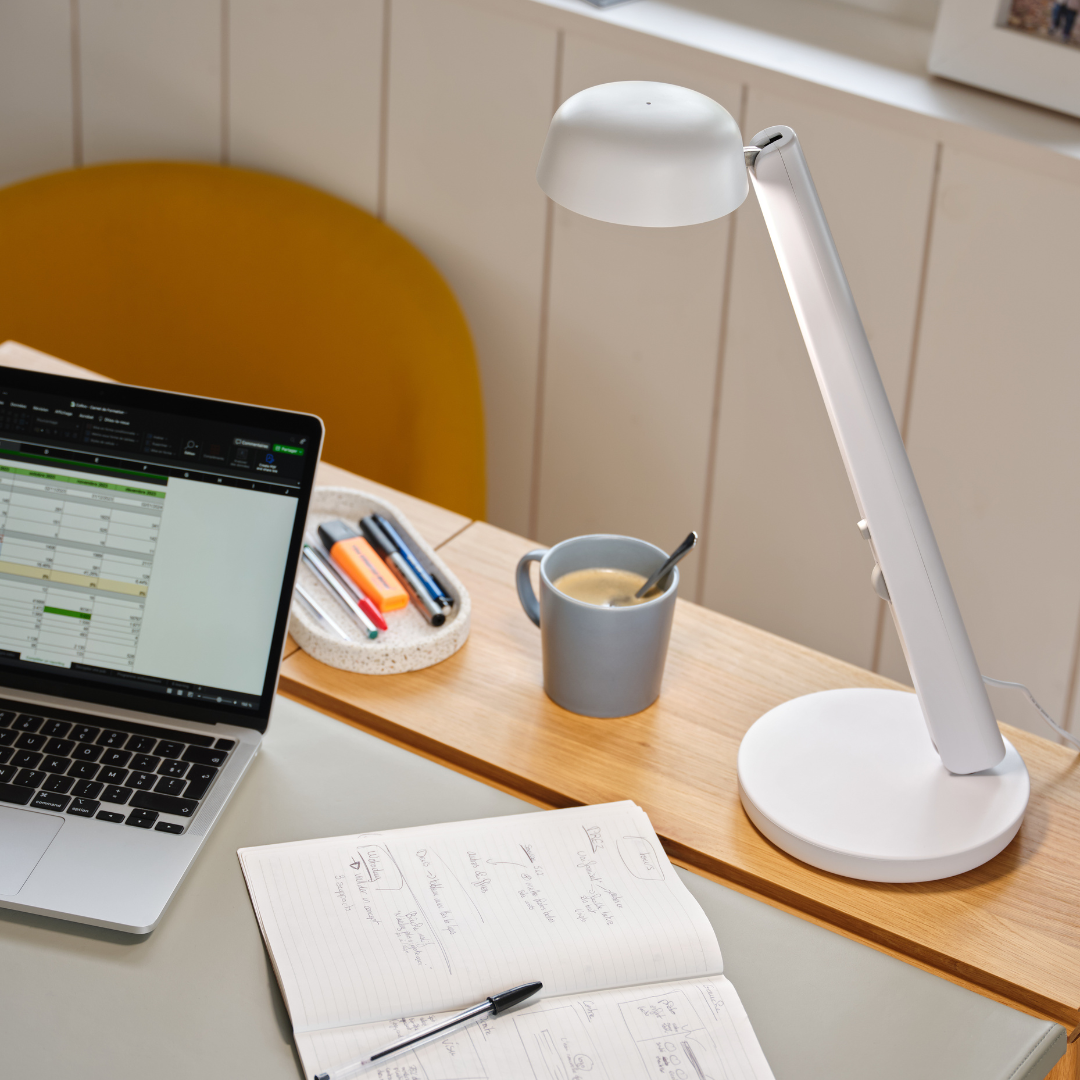
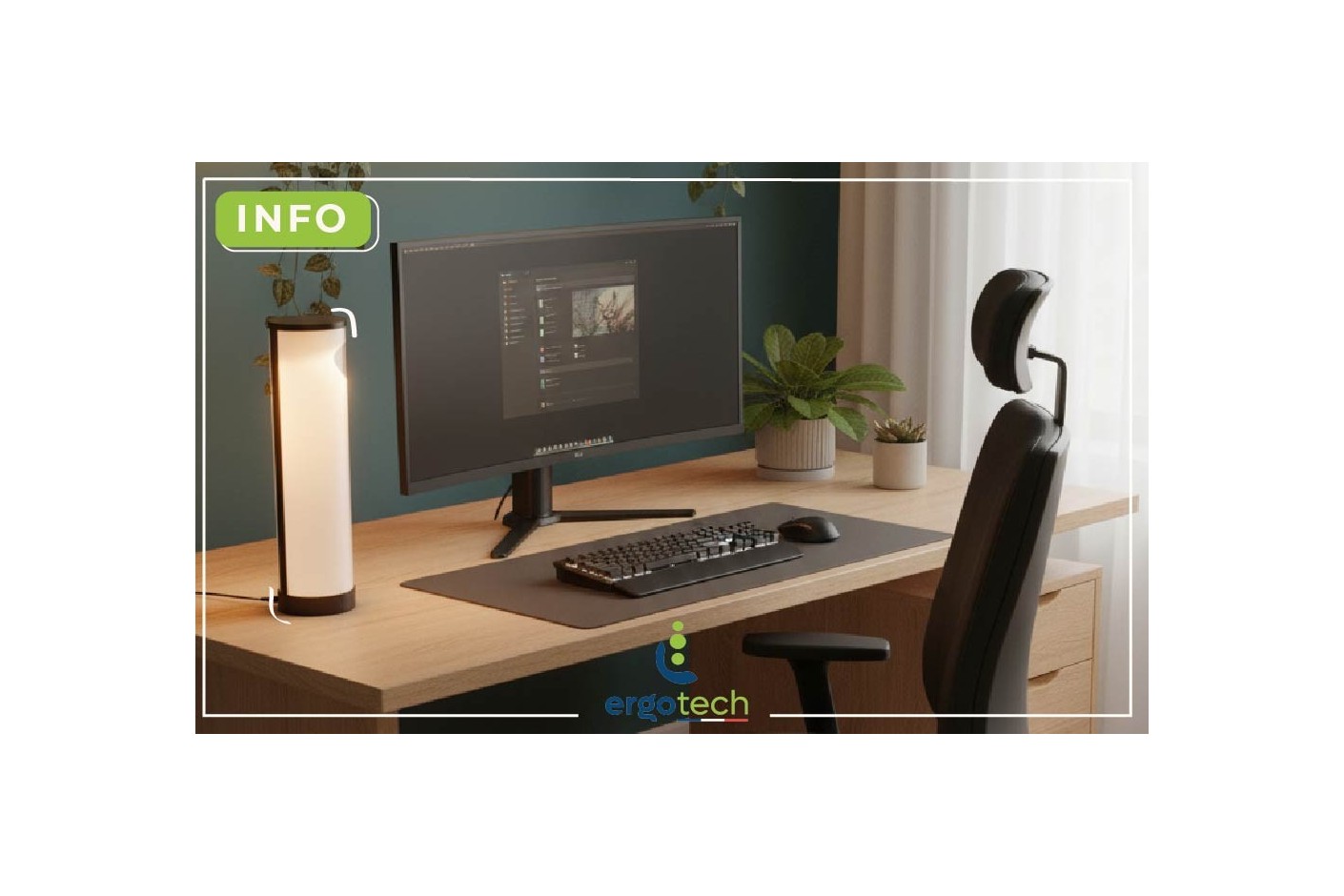
Professional LED desk lamps, adjustable and dimmable, are now the most effective way to meet these requirements.
What Colour Temperature is Best for Office Lighting?
The ideal colour temperature for office work is around 4000 K. This temperature provides:
- • Good readability for documents
- • Optimal concentration
- • Reduced visual fatigue
It aligns with recommendations from workplace lighting standards.
Which Light is The Most Comfortable for The Eyes?
The most comfortable light for the eyes is:
- • Light that is neither too warm nor too cool
- • Flicker-free
- • Well distributed
- • With a good Colour Rendering Index (CRI ≥ 80)
High-quality LED lighting, combined with indirect lighting and an adjustable desk lamp, offers excellent visual comfort today.
What Brightness Should I Choose for My Office Lighting?
Lighting brightness is mainly in lumens and lux. As a general guideline:
- • At least 500 lux are recommended for an office workstation
- • A desk lamp generally provides between 400 and 800 lumens, depending on usage
Dimmable brightness allows you to adapt lighting to tasks and ambient light levels.
Anti-Glare Feature: Useful or Not?
Yes, anti-glare features are strongly recommended, especially for screen-based work. They help:
- • Reduce visual fatigue
- • Avoid disturbing reflections
- • Improve comfort over long working periods
Conclusion: Choosing the Right Office Lighting
Choosing the right office lighting means finding the right balance between brightness, colour temperature and visual comfort.
Appropriate general lighting, complemented by an ergonomic and adjustable desk lamp, helps create a productive and comfortable working environment. Consider the specifics of your workstation (existing natural light, detailed work or screen-based work, daily working time) to make the right choice.
New: Discover Polux, the desk lamp with adjustable brightness and colour temperature that adapts to the ambient light in your environment for high-performance lighting in any situation. Made in Occitanie, winner of the Made in France 2023 Product of the Year Grand Prize.