

 Français

Herniated Disc: Causes, Symptoms and Solutions
What is a herniated disc?
How does a herniated disc occur?
The spine is made up of 24 vertebrae separated by intervertebral discs. These discs consist of a rubbery exterior and a jelly-like center, the nucleus, and their role is to absorb shocks and pressure affecting the spine.
A herniated disc occurs when the disc and its outer ring crack and the gel-like core pushes outward, creating a bulge at the back of the vertebra.

A slipped disc can occur following trauma, repeated poor posture or frequent lifting of heavy loads. The disc becomes weakened due to constant pressure. Age-related dehydration of the discs can also contribute to the development of a herniated disc.
What symptoms indicate a herniated disk?
In most cases, a herniated disc appears in the lower back, causing lower back pain. However, the herniaton can occur at different levels of the spine and lead to neck pain, thoracic pain or lumbar pain depending on the affected vertebra.
Because nerves run along the back of the spine, the herniated disc may irritate a nerve root and cause neuralgia, such as sciatica caused by a herniated disc when the sciatic nerve is affected.
Different types of disc herniation
Although the term “herniated disc” is commonly used, there are actually several conditions depending on the stage of the disc injury.
A disc bulge occurs when the disc begins to deform but has not yet ruptured. The gel-like core has not yet escaped, and the nerve is not irritated, but the disc bulge may still cause local pain.
At the next stage, it is called a protrusion or contained herniation, when the core pushes outward but is still held in place by the intact part of the intervertebral disc and the fibrous ring, as well as the ligament that runs along the back of the vertebrae. A contained herniation often causes pain because the gel-like core presses against the disc.
An extrusion or non-contained herniation occurs when the core is no longer held in place and exits the disc, creating a protrusion that may irritate nerve roots at the back of the spine.
Finally, a fragment of the gel-like core may detach and move along the spinal cord and nerve roots, causing pain along its path.
How can a herniated disc be treated?
In most cases, a herniated disc heals naturally over time, although treatments may be prescribed to relieve symptoms.
Medical treatment and surgery for a slipped disc
Medical treatment may first be prescribed to relieve herniated disc pain. In some cases, injections may be performed to help reduce pain. Wearing a rigid brace may also be recommended to immobilise the back.
In more severe cases, or when the condition does not heal on its own, surgery may be considered to remove the herniated disc.
The Ergotech cushion to relieve pain caused by a herniated disc
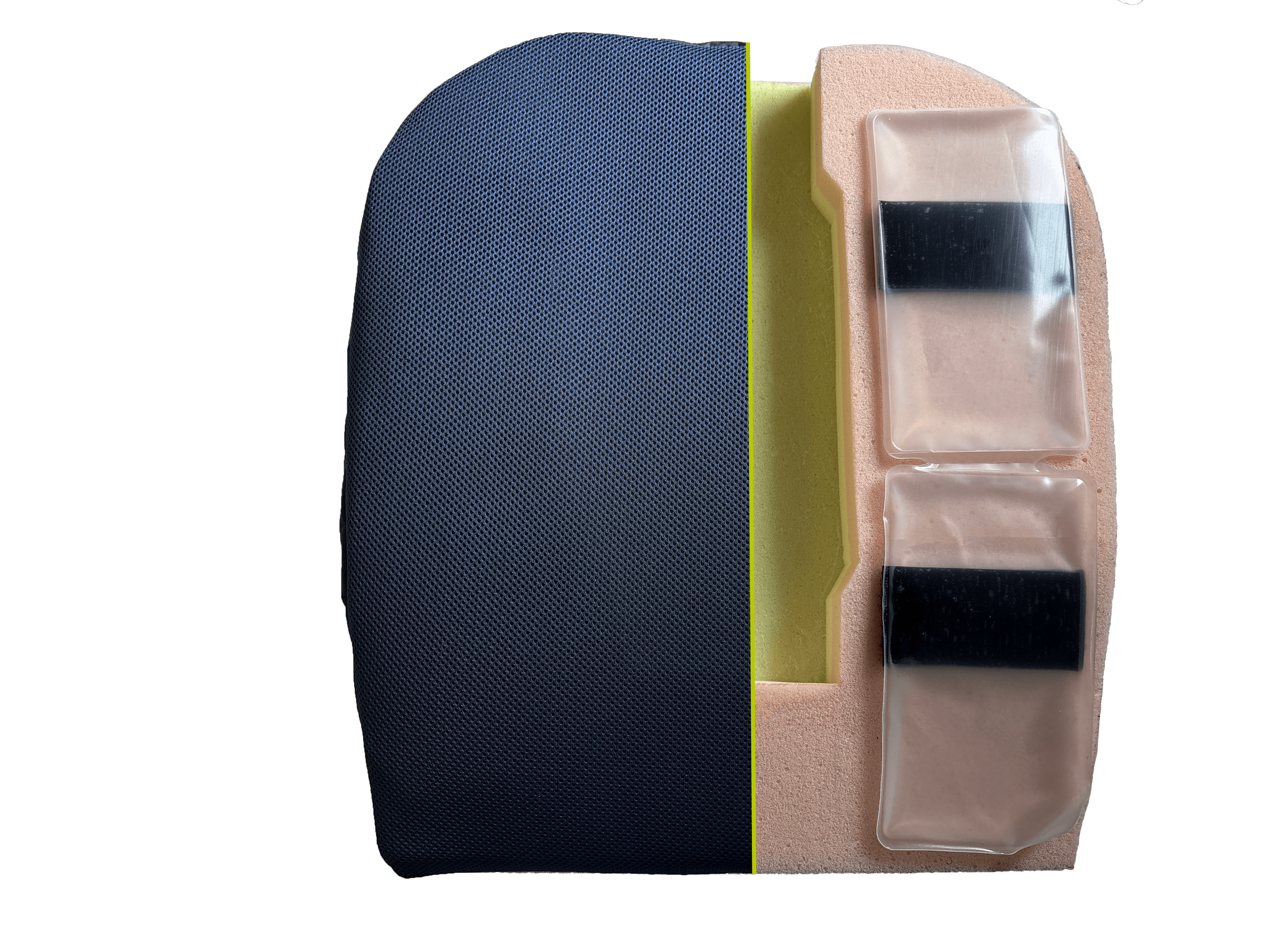
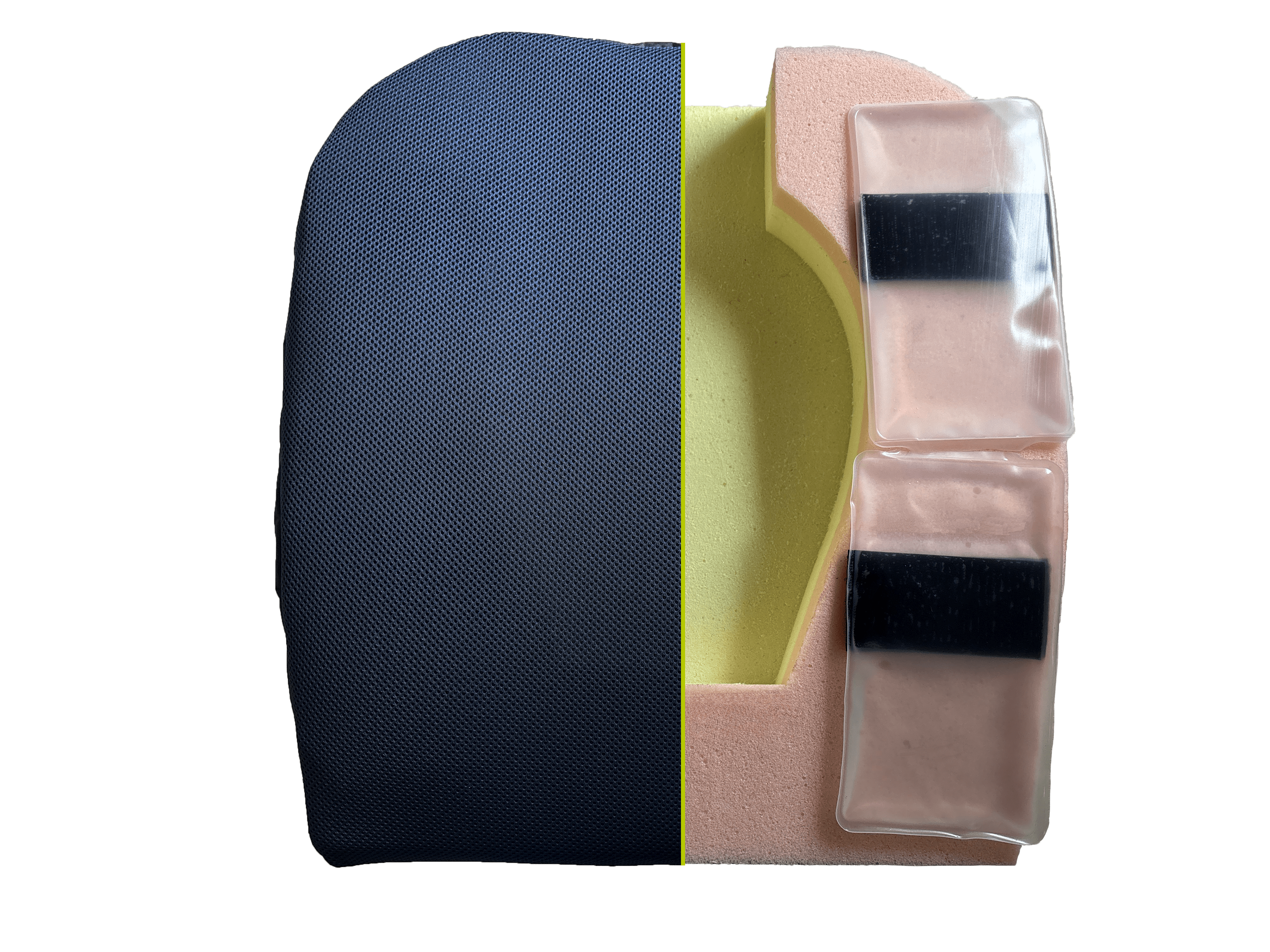
Since 2012, Ergotech has specialised in the design of ergonomic equipment and has developed a seat cushion designed to relieve herniated disc pain: the Ergoccyx cushion. Available as a office chair cushion for herniated disc and as a herniated disc car cushion, Ergoccyx works in several ways:
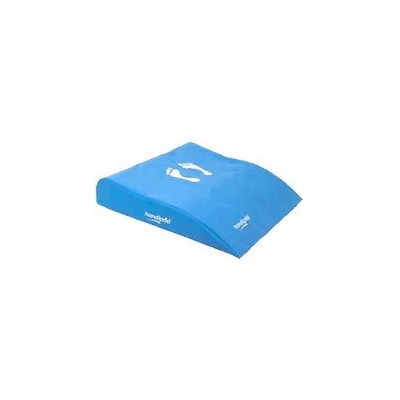
- Seat-raising cushion: thicker at the back to open the pelvis and restore a more natural spinal curve. This prevents slouching forward and reduces pressure on the spine.
- Unique high-viscosity fluid technology: the viscous liquid moves under body weight and movement to reduce compression while sitting.
- Cushion with coccyx and sacrum cut-out to reduce pressure and compression on these areas, as well as shocks and vibrations when driving.
- In the car, it absorbs shocks and vibrations that can travel up the back and worsen pain.
- Fully designed and manufactured in-house, with custom adaptations available.
