

 Français



Workplace Lighting: The Standards You Need to Know
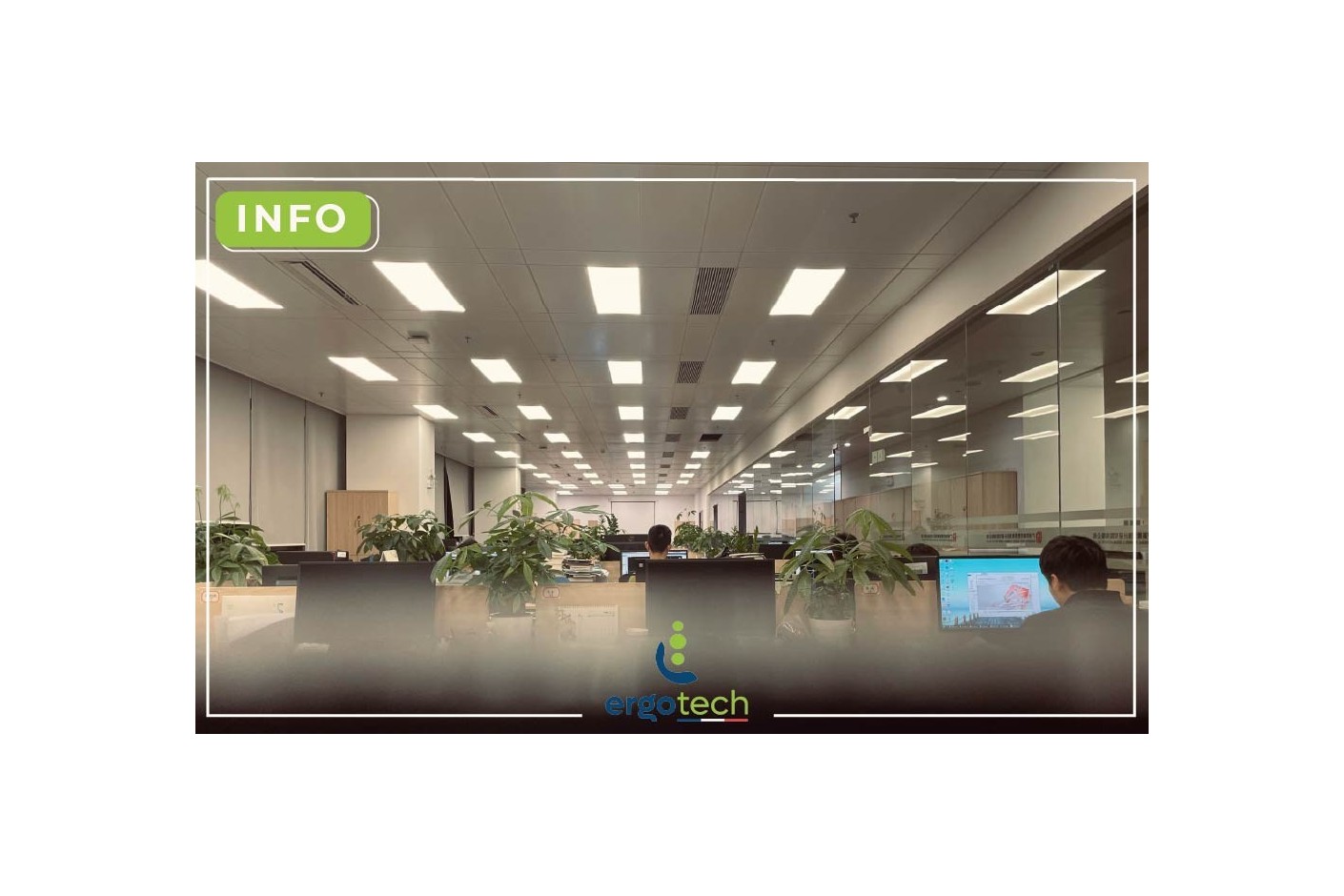
Workplace lighting plays a key role in visual comfort, productivity and employee health. Poorly adapted lighting can cause or worsen fatigue and headaches, while good lighting improves concentration and well-being in the office.
Table of contents
European standards for workplace lighting
European standards aim to harmonise recommendations across member states and define recommended lighting levels for professional environments.
The EN 12464-1 standard
The reference standard for indoor workplace lighting is EN 12464-1, which applies across Europe. It sets minimum lighting levels (expressed in lux) according to the use of each space. This voluntary standard does not constitute a legal obligation, but it is widely used as a reference for compliance and best practice.
Key reference values include:
- • Offices, computer workstations: 500 lux
- • Meeting rooms: 300 to 500 lux
- • Circulation areas: 100 to 200 lux
- • Precision work: up to 750 lux or more
The EN 12464-1 standard dates back to 2002. Today, we would rather recommend lighting levels of 750 lux for office work, especially for people who spend 6–8 hours per day working on a screen.
The importance of individual office lighting
Even when general lighting meets recommended standards, individual workstations may have specific needs depending on tasks, age or visual requirements. Individual lighting allows users to:
- • Adjust lighting levels to task requirements
- • Reduce visual fatigue
- • Improve overall workstation comfort
Dimmable desk lamps with LED light and an appropriate colour temperature (around 4000 K for office work) are now particularly recommended.
What are the consequences of poor lighting?
Inadequate lighting is more than a comfort issus: it can have tangible effects on health, safety and performance.
Impacts on health
Poor lighting conditions can lead to:
- • Visual fatigue and headaches
- • Eye irritation or dryness
- • Concentration difficulties
- • Stress and irritability
- • In the long term, musculoskeletal disorders linked to compensatory poor posture
Impacts on productivity and safety
Insufficient or poorly positioned lighting can also:
- • Increase errors
- • Reduce work efficiency
- • Increase the risk of accidents (falls, difficulty reading information)
Investing in adequate office lighting is therefore a simple and effective way to improve both employee well-being and overall organisational performance.
Conclusion: choosing compliant and high-performance lighting
Complying with workplace lighting standards is not just about meeting regulatory requirements: it is also a strategic choice that supports comfort, health and productivity.
Well-designed general lighting, combined with ergonomic and adjustable office lighting, helps create work environments that can be adapted to individual users and modern professional needs.
Discover our selection of professional office lighting, designed to meet current standards and the needs of modern workspaces.