

 Français


How To Recognize And Relieve Sciatica
Lower back pain that radiates down the leg is a common symptom of sciatica, a condition that can significantly affect daily life. From the different types of sciatica to its symptoms and the best solutions to relieve pain, this article explains everything you need to know about sciatic nerve pain.
Table of contents
Back and spine anatomy
To understand the origin of sciatica, it is important to start with the anatomy of the back and spine.
The spine is the structural pillar of the body. It is composed of several types of vertebrae:
- 7 cervical vertebrae
- 12 thoracic vertebrae
- 5 lumbar vertebrae
Below the lumbar vertebrae are the sacrum, made of 5 fused vertebrae, and the coccyx or tailbone, composed of 3 to 5 small fused vertebrae.

Between two adjacent vertebrae is an opening called the intervertebral foramen. Through these openings pass nerve roots such as the sciatic nerve, which innervate different parts of the body.
Vertebrae are also separated by intervertebral discs made of fibrous cartilage and a gel-like core. These discs protect the spine from shocks by distributing pressure through the deformable nucleus.
It is also important to note that the spine is not naturally straight. It has natural curves: a concave curve in the cervical and lumbar regions and a convex curve in the thoracic area. When this natural curvature is altered — for example during excessive bending or twisting — the risk of back injury increases. Intervertebral discs become compressed and the nucleus can no longer distribute pressure effectively.
What is a sciatica?
Definition and symptoms
Sciatic nerve neuralgia, commonly known as sciatica, refers to pain in the leg caused by irritation of the sciatic nerve. The sciatic nerve runs along the back of each leg and originates from the lower lumbar vertebrae (L4 and L5) and the first sacral vertebra (S1).
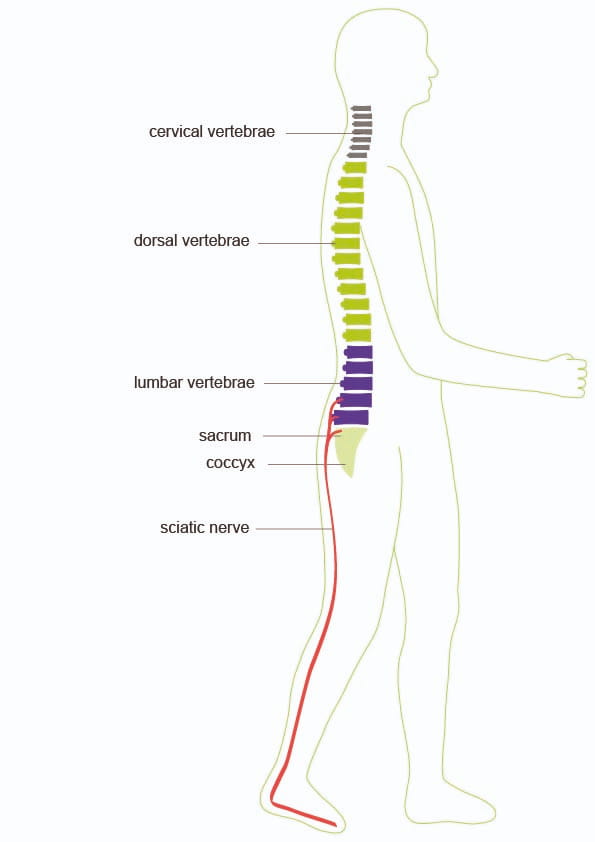
Because a nerve is involved, the condition is called neuralgia. In most cases, the pain is felt in only one leg. It usually affects the buttock and thigh and can radiate down to the foot.
What causes sciatica?
The main cause of sciatica is a herniated disc (an abnormal bulge in the intervertebral disc) that compresses and irritates the sciatic nerve.
Other spinal conditions may also lead to sciatica:
- osteoarthritis;
- trauma from a fall or accident;
- herniated disc;
- vertebral compression;
- inflammatory spinal disease;
- spinal infection;
- tumor or metastases (rare cases).
The different types of sciatica
Although the term sciatica is often used as a general term, there are actually several types of sciatic nerve neuralgia depending on the symptoms involved.
Sciatica, lumbosciatica or cruralgia: what’s the difference?
As explained above, sciatica refers to irritation of the sciatic nerve. It is also known as sciatalgia.
The term lumbosciatica is used when a person suffers from both lower back pain (lumbago) and sciatica. Pain originates from compression of the sciatic nerve root in the lumbar vertebrae and radiates down the leg.
Cruralgia, or femoral neuralgia, occurs when the femoral nerve is irritated. This nerve originates slightly higher in the spine (L2, L3 and L4). Like sciatica, it results from nerve irritation and causes leg pain, but typically affects the front of the thigh.
Truncated or paralysing sciatica?
Sciatica pain can be constant or intermittent and may affect only part of the nerve pathway. Truncated sciatica occurs when the pain does not extend to the foot and stops at the buttock or knee.
Paralysing sciatica, as the name suggests, causes weakness or paralysis in the affected leg and may lead to reduced strength and mobility.
How to relieve sciatica
Medication and surgery to relieve sciatic nerve pain
The first approach to relieve pain is medication. Painkillers and anti-inflammatory drugs help manage sciatica symptoms, even if they do not treat the underlying cause. Corticosteroid injections may also be considered for persistent pain.
Stretching exercises, physiotherapy or osteopathy sessions may also help reduce sciatic nerve compression.
Surgery may be considered when pain persists for a long time and other treatments have failed. However, surgical procedures are not always successful and can involve risks, so it is important to carefully weigh the pros and cons with a medical specialist.
Cushion to relieve sciatica
Other solutions exist to relieve sciatic nerve pain without surgery.
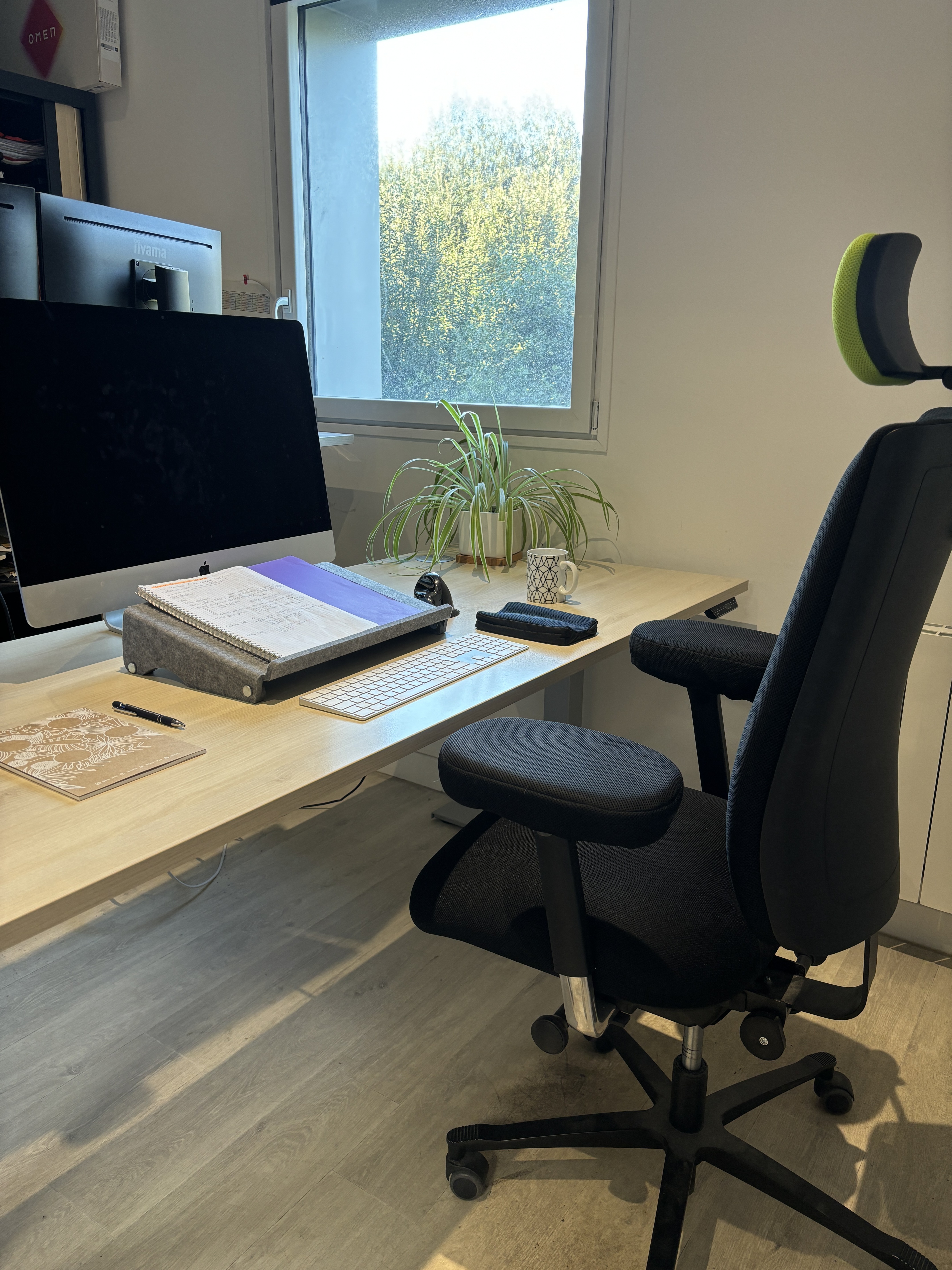
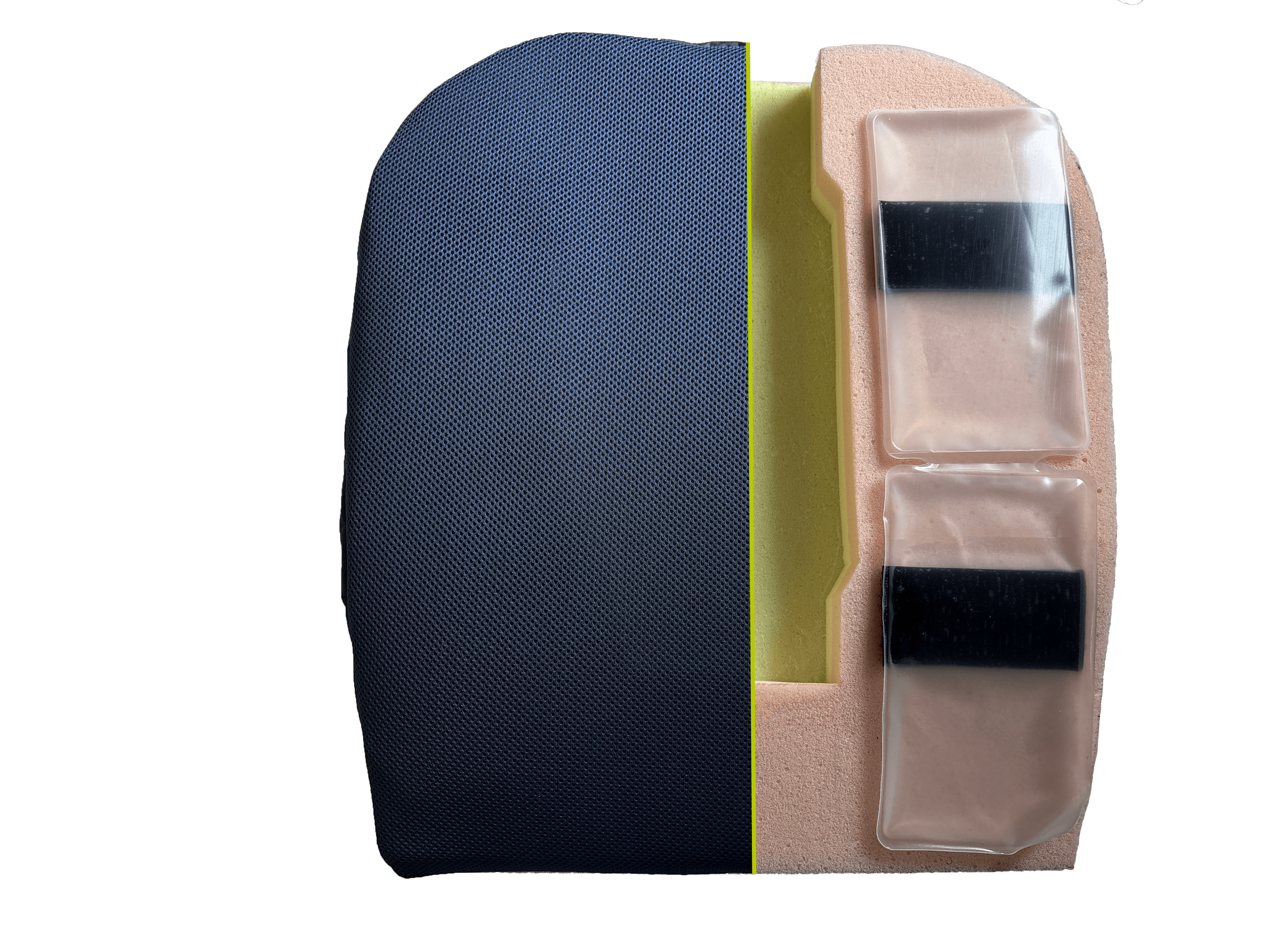
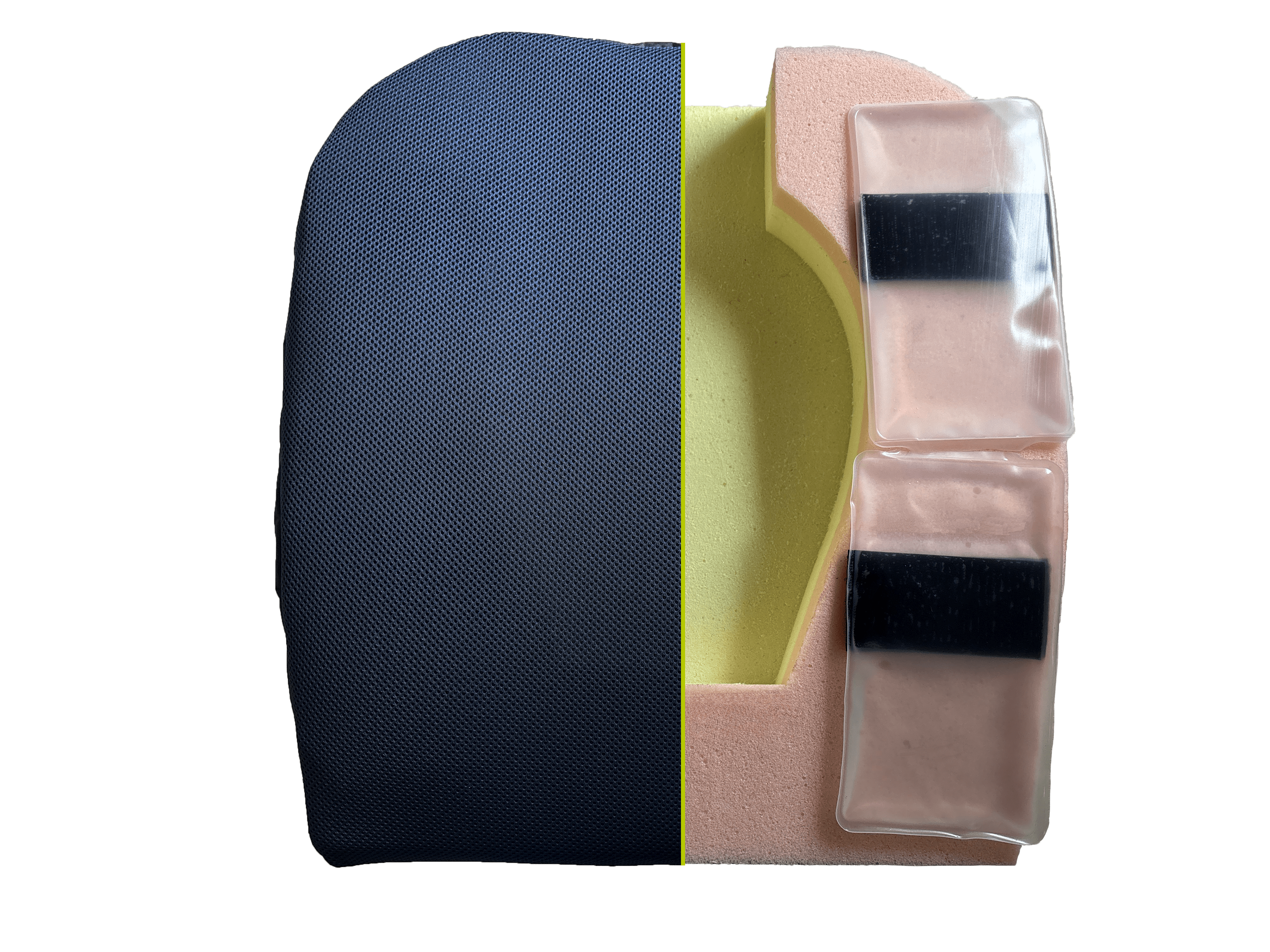
Today, many sciatica cushions are available for everyday use. These cushions are designed with a coccyx cut-out to reduce pressure on the sciatic nerve while sitting.
At Ergotech, we use our expertise in ergonomic design to develop a range of sciatica relief cushions adapted to different uses: a sciatica cushion for home or office, a sciatica cushion for car seats, and a sciatica cushion for construction machinery.
Their main benefit lies in their unique design combining High Resilience foam with High Viscosity fluid. This fluid technology is a signature feature of Ergotech products. It remains stable regardless of temperature, unlike traditional gels that harden in the cold or soften in heat. The fluid moves with body weight and movement to reduce pressure, improve blood circulation and enhance muscle oxygenation.
In vehicles, the combination of High Viscosity fluid and foam absorbs shocks and vibrations transmitted through the seat to the body, particularly the spine.
Ergoccyx cushions by Ergotech also include a coccyx and sacrum relief cut-out to reduce pressure in this area and protect the spine.