

 Français







Everything You Need To Know About Neuralgia
What is neuralgia?
What causes nerve pain?
Neuralgia refers to a disorder affecting a nerve. It is characterized by pain that follows the entire path of a nerve and can occur in several situations:
- due to nerve irritation;
- due to a virus, such as the herpes zoster virus responsible for shingles;
- due to nerve compression, for example compression of the sciatic nerve caused by a herniated disc.
How can you recognize nerve inflammation?
Neuralgia is usually characterized by sharp or subacute pain. People suffering from neuralgia often describe sensations similar to electric shocks or burning pain.
Pain caused by neuralgia may also occur in episodes or flare-ups.
What are the most common types of neuralgia?
Neck neuralgia, leg neuralgia… Neuralgia can appear suddenly and affect several parts of the body.
Nerve pain affecting the lower limbs
There are many cases of neuralgia affecting the lower limbs (buttock neuralgia, anal neuralgia, thigh neuralgia, etc.).
A very common example is sciatica, which occurs when the sciatic nerve becomes compressed. This causes inflammation and pain that spreads along the path of the nerve. Sciatica typically causes pain in the buttock and the back of the thigh, sometimes extending down the leg and into the foot. Lower back muscle spasms may also occur.

Sometimes confused with sciatica, cruralgia or femoral neuralgia is caused by compression or inflammation of the femoral nerve. Cruralgia causes pain in the front of the thigh that may extend down to the foot.
Less well known, pudendal neuralgia, also known as Alcock canal syndrome, results from compression of the pudendal nerve. This nerve runs through the pelvis and passes through the Alcock canal. Often confused with gynecological disorders, this neuralgia causes pain in several pelvic areas, especially anal pain that worsens when sitting.
Also caused by a compressed nerve in the pelvis, cluneal neuralgia is characterized by pain in the upper thigh and buttock.
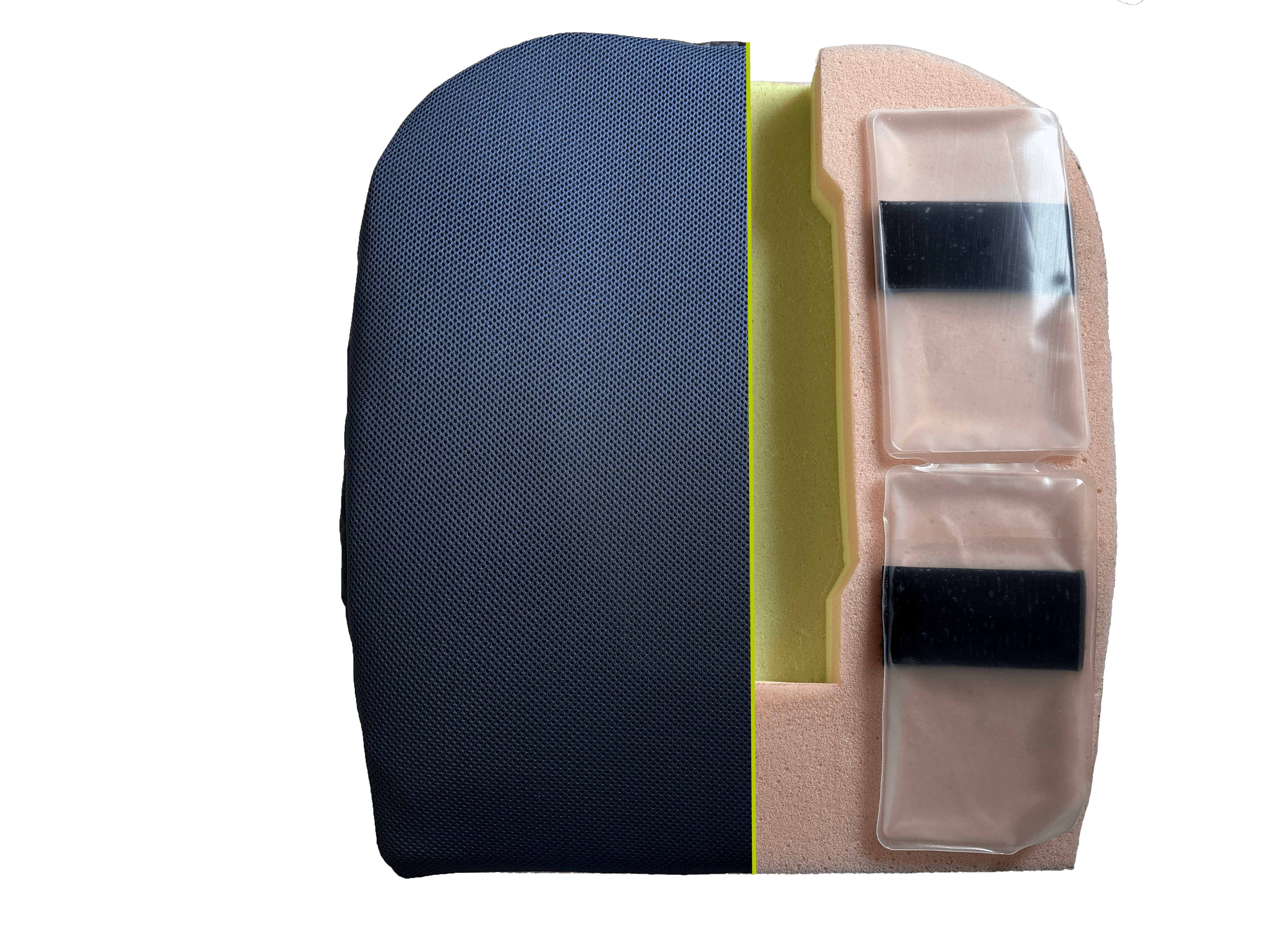
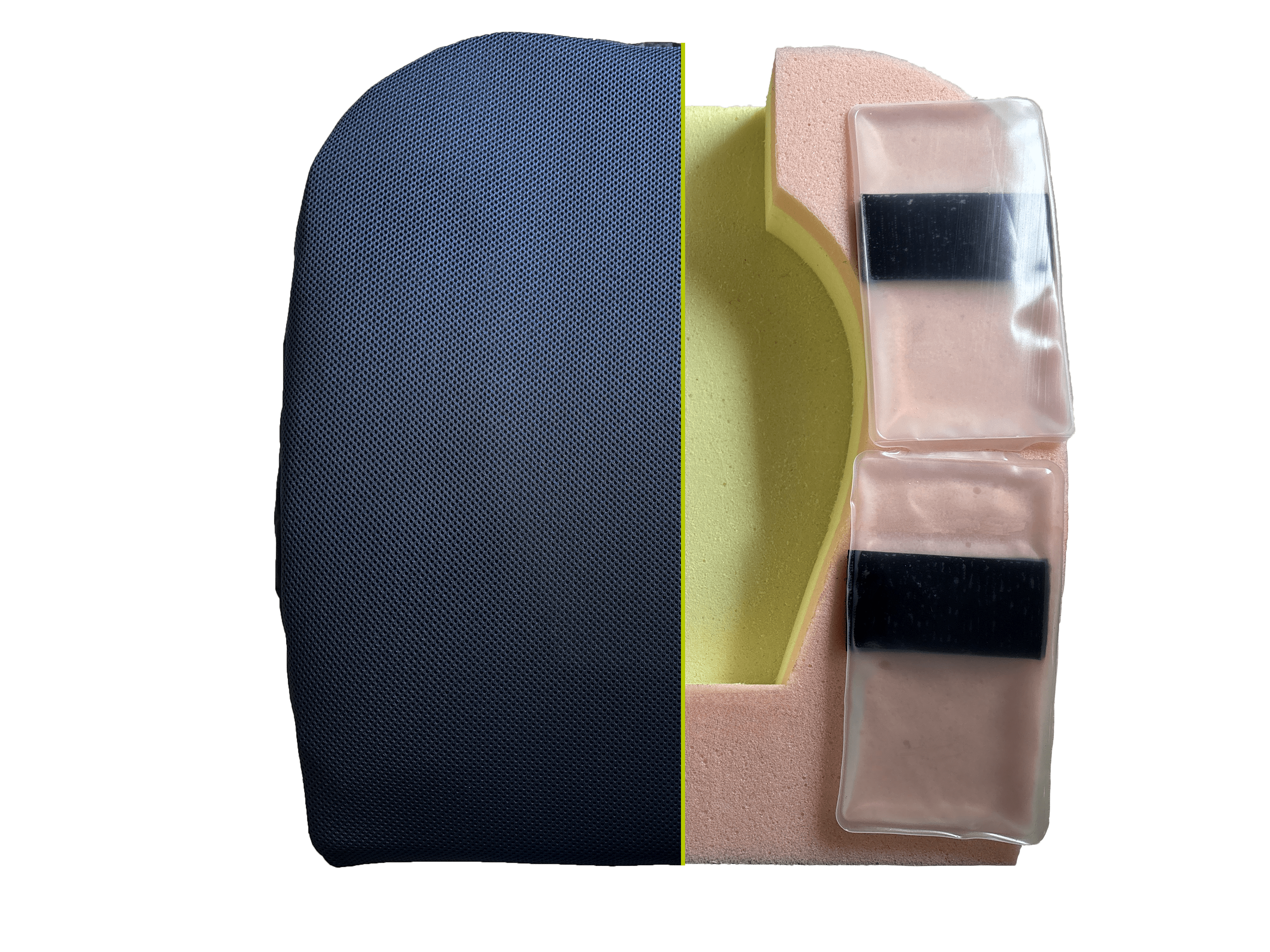
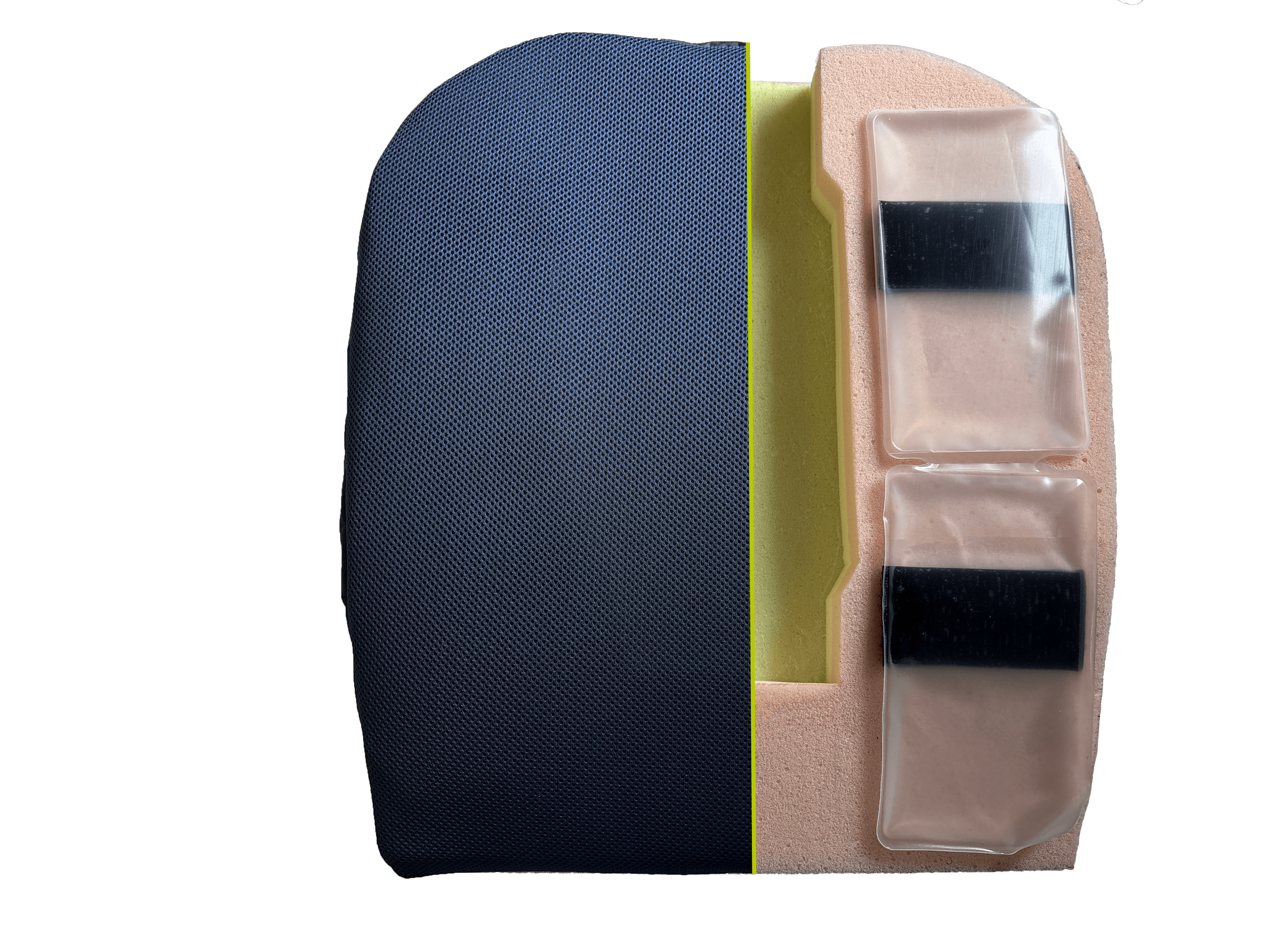
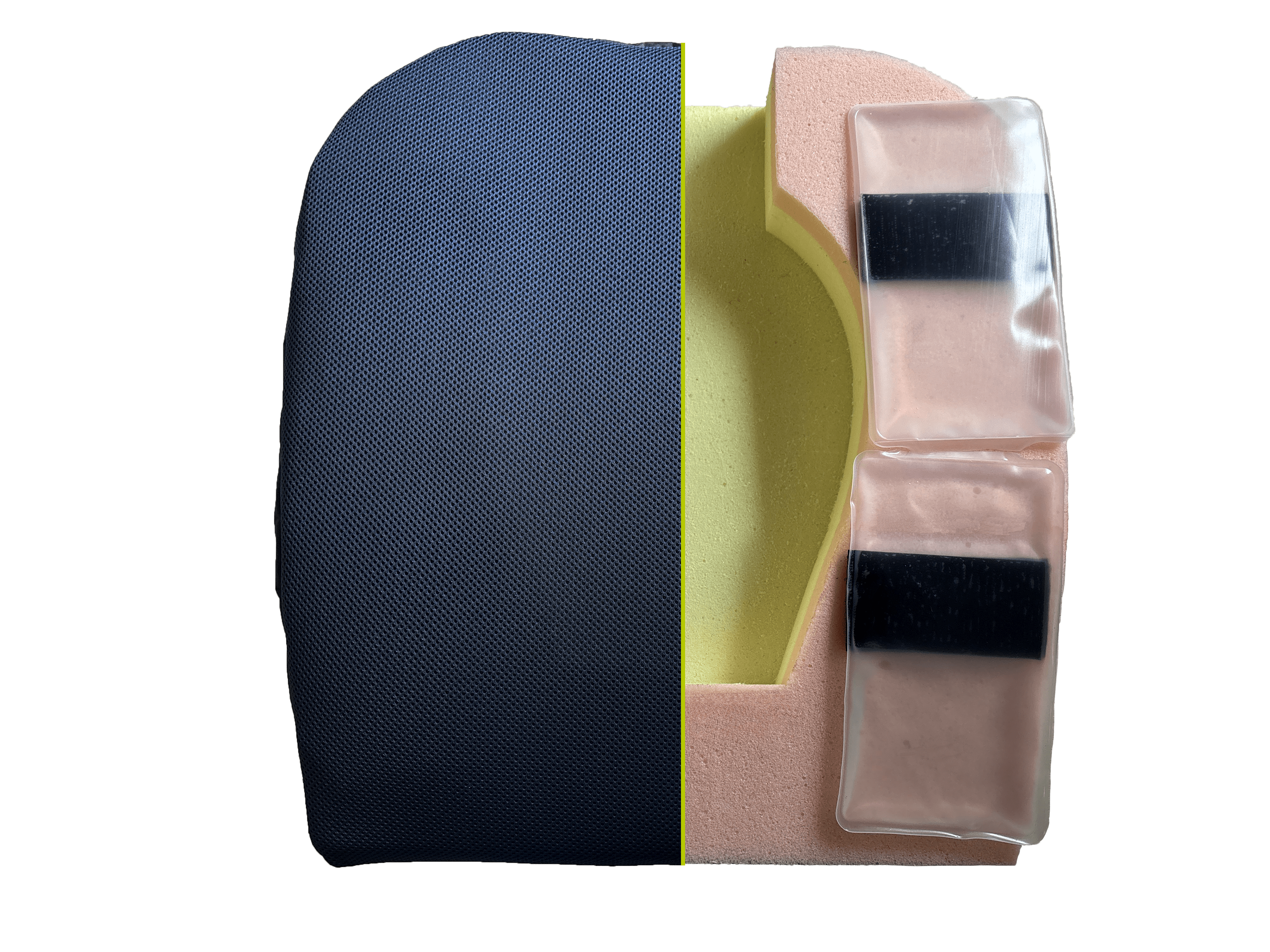
PUDENDAL NEURALGIA CUSHION CLUNEAL NEURALGIA CUSHION
Nerve pain affecting the neck and head
Neuralgia affecting the neck and head can be caused by a blocked cervical vertebra, an injury or rheumatic conditions.
Trigeminal neuralgia occurs when the trigeminal nerve — which has three branches in the face — becomes compressed, sometimes by a blood vessel. In rare cases, tumors or multiple sclerosis plaques may also cause trigeminal neuralgia.
Arnold’s neuralgia occurs when the greater occipital nerve becomes compressed. It usually causes intense unilateral pain that radiates from the neck to the back of the head and sometimes toward the ear, eyebrow or eye.
Dental neuralgia refers to pain caused by irritation of a nerve inside the tooth, often due to tooth decay.
Nerve pain affecting the upper limbs
Upper limbs may also be affected by neuralgia, such as cervico-brachial neuralgia or intercostal neuralgia.
Cervico-brachial neuralgia, sometimes called neck sciatica or arm sciatica, causes pain radiating from the neck down to the arm or even the hand. It may result from nerve compression in the cervical vertebrae, for example due to osteoarthritis or a herniated disc.
Intercostal neuralgia causes chest pain and is triggered by compression of a nerve located between the ribs.
How can neuralgia be treated?
It is not possible to cure neuralgia itself, but the pain can be reduced.
Pain medication may help reduce nerve pain. Physiotherapy or osteopathy sessions may also help relax muscles and relieve pressure on the nerve.
In some cases, surgery may be performed to release the compressed nerve. However, these procedures are major operations and are not always successful, so medical advice is essential.
Various ergonomic solutions such as seat cushions can also help relieve pain on a daily basis without requiring surgery.
In any case, consult your doctor or a specialist to find the treatment best suited to your condition.